Good mornin' Darlins!!!
Solar Update- we still as being told there is zero flare activity right now- not even a C class flare in the past 4 days. But the Geomagnetic storm has increased, kp7 and is now a G3 "Strong" Geomagnetic Storm as of last night. there was also a filament that ripped off- SO said that it's not going to be geoeffective, but I disagree. We still have two major coronal holes directly facing earth and the solar wind speeds are still high..... I strongly suspect that you may want to keep something for headaches on hand today, be careful driving, and expect some fuckupery from your wireless gadgets, lol.
I'm glad that the SDO pics seems to be back up... not that I entirely trust them,lol....
As for CERN.... well it looks like they lost beam 1 last night just before 20:00 then their injected again around 0400 this morning and dumped again within a few minutes.... the grphs are showing a couple of energy spikes that I associate with them about to inject beams.... but no injection. Interesting..... and on the Dash they are showing a weird spike in beam 2... but there is no indication that there were any beams running at the time. hmmmmmm.....


Solar/Cern Update Notes from yesterday:
So darlin's- we are under a pretty good sized geomagnetic storm right now- have been since last night- KP6. absolutely NO solar flare activity at all!!! I mean NONE- we had an M1.2 on the 4th... and literally everything stopped- not even a C class flare since then. We also have MASSIVE coronal holes- approx 50% of the upper quadrant is a giant coronal hole, and there is quite a pick up in the solar wind speeds since last night. Interestingly enough, EVERY SDO filter shot of the sun right now is FUCKED- either missing entirely, or just a mess.... Very Interesting......
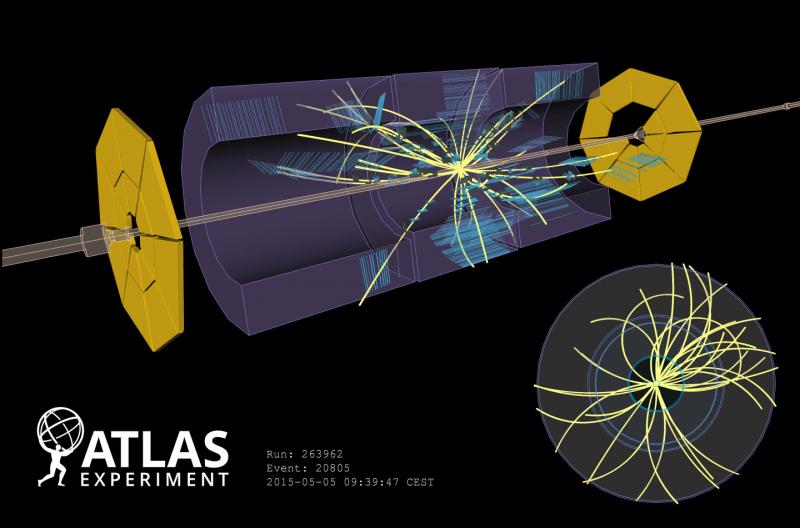
CERN has been running on high- the last run just dumped a little more than an hour ago- they ran on high power- 6.5 TeV for just slightly short of 24 hours- at over 1600 bunches.
Solar Update- we still as being told there is zero flare activity right now- not even a C class flare in the past 4 days. But the Geomagnetic storm has increased, kp7 and is now a G3 "Strong" Geomagnetic Storm as of last night. there was also a filament that ripped off- SO said that it's not going to be geoeffective, but I disagree. We still have two major coronal holes directly facing earth and the solar wind speeds are still high..... I strongly suspect that you may want to keep something for headaches on hand today, be careful driving, and expect some fuckupery from your wireless gadgets, lol.
I'm glad that the SDO pics seems to be back up... not that I entirely trust them,lol....
As for CERN.... well it looks like they lost beam 1 last night just before 20:00 then their injected again around 0400 this morning and dumped again within a few minutes.... the grphs are showing a couple of energy spikes that I associate with them about to inject beams.... but no injection. Interesting..... and on the Dash they are showing a weird spike in beam 2... but there is no indication that there were any beams running at the time. hmmmmmm.....


Solar/Cern Update Notes from yesterday:
So darlin's- we are under a pretty good sized geomagnetic storm right now- have been since last night- KP6. absolutely NO solar flare activity at all!!! I mean NONE- we had an M1.2 on the 4th... and literally everything stopped- not even a C class flare since then. We also have MASSIVE coronal holes- approx 50% of the upper quadrant is a giant coronal hole, and there is quite a pick up in the solar wind speeds since last night. Interestingly enough, EVERY SDO filter shot of the sun right now is FUCKED- either missing entirely, or just a mess.... Very Interesting......
CERN has been running on high- the last run just dumped a little more than an hour ago- they ran on high power- 6.5 TeV for just slightly short of 24 hours- at over 1600 bunches.